Chlorine Dioxide for Legionella Control in Healthcare Water Systems
What Is Electrochlorination?
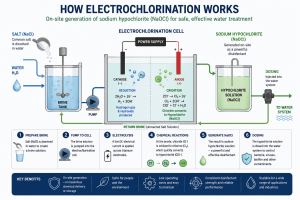
Electrochlorination is an advanced water disinfection process that produces sodium hypochlorite on-site using three readily available inputs: salt, water and electricity.
Rather than transporting and storing large quantities of bulk chlorine chemicals, an electrochlorination system generates a low-strength disinfectant solution at the point where it is required.
This makes electrochlorination an attractive solution for industrial, municipal, mining, power generation, potable water, wastewater and commercial water treatment applications.
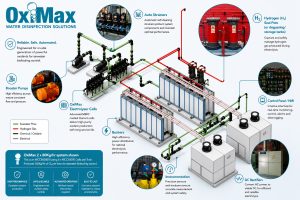
At Water Engineers Australia, our Oximax Electrochlorination™ systems are engineered to provide reliable on-site sodium hypochlorite generation for applications ranging from relatively small water treatment installations through to major industrial facilities.
How Does Electrochlorination Work?
The electrochlorination process begins with a salt solution containing sodium chloride (NaCl).
This solution passes through a specially designed electrolytic cell. When electrical current is applied to the electrodes, an electrochemical reaction occurs that produces a disinfecting solution containing sodium hypochlorite.
The process can be represented in simplified form as:
NaCl + H₂O + Energy → HOCl + NaOCl + H₂
The generated sodium hypochlorite solution can then be dosed into the water treatment process according to the required disinfection demand.
Because production occurs on-site, operators can generate disinfectant as required rather than relying entirely on deliveries of bulk sodium hypochlorite.
Why Generate Sodium Hypochlorite On-Site?
Traditional chlorination systems can require the transport, handling and storage of hazardous or concentrated treatment chemicals.
Electrochlorination provides an alternative approach.
By producing sodium hypochlorite directly at the treatment facility, organisations can reduce their dependence on external chemical deliveries while maintaining a reliable source of disinfectant.
Key Benefits of Electrochlorination
Improved Chemical Safety
Generating low-strength sodium hypochlorite on-site can reduce the requirement to transport, unload and store large volumes of concentrated chlorine chemicals.
On-Demand Production
Disinfectant can be generated according to the operational requirements of the water treatment facility.
Reduced Dependence on Chemical Deliveries
Sites in regional, remote or industrial locations can be particularly vulnerable to chemical supply interruptions. On-site generation provides greater control over disinfectant production.
Consistent Treatment
A correctly designed electrochlorination system provides controlled and repeatable sodium hypochlorite production.
Automation
Modern systems can be integrated with process controls, monitoring equipment and dosing systems to provide highly automated operation.
Potential Operating Cost Savings
For suitable applications, generating sodium hypochlorite from salt, water and electricity can provide significant lifecycle savings compared with continually purchasing and transporting bulk treatment chemicals.
Where Is Electrochlorination Used?
Electrochlorination technology is highly versatile and can be engineered for a wide range of water treatment applications.
Power Stations and Seawater Systems
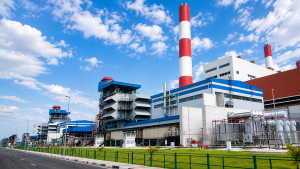
Seawater-cooled power stations, refineries and other coastal industrial facilities can experience significant biological growth within seawater intake and cooling systems.
Marine organisms and biofouling can restrict water flow, reduce heat-transfer efficiency and increase maintenance requirements.
Electrochlorination allows chlorine to be generated from saline water and applied to help control biological growth throughout these systems.
Potable Water Treatment
Reliable disinfection is essential for producing safe drinking water.
On-site sodium hypochlorite generation can be incorporated into potable water treatment facilities to provide controlled chlorine dosing while reducing dependence on bulk chemical storage and deliveries.
Applications can include municipal treatment facilities, regional communities, remote facilities, mining camps and industrial sites.
Mining Water Treatment
Mining operations often require water treatment infrastructure in remote locations where chemical transport and supply logistics can be challenging.
Electrochlorination can provide on-site disinfectant generation for potable water, process water, wastewater and recycled water applications.
Automated systems can also be designed to minimise operator intervention.
Wastewater and Recycled Water
Wastewater generally requires appropriate treatment and disinfection before reuse or discharge.
Electrochlorination can provide a reliable source of sodium hypochlorite for pathogen control across municipal, industrial and decentralised wastewater treatment applications.
Commercial Swimming Pools and Water Parks
Large commercial swimming pools, resorts, aquatic centres, water parks and water features require reliable disinfection to maintain water quality.
On-site generation provides an alternative to continuously transporting and handling bulk liquid chlorine.
Electrochlorination and Seawater
One particularly valuable application for electrochlorination is seawater treatment.
Because seawater naturally contains high concentrations of sodium chloride, it can provide the chloride required for the electrochemical process.
A portion of the seawater can be passed through the electrochlorination system to generate a disinfecting solution before being returned to the main water stream.
This approach is widely applicable to industries dealing with seawater intake systems, cooling water and marine biofouling.
Electrochlorination vs Bulk Sodium Hypochlorite
Both approaches ultimately provide chlorine-based water disinfection, but the way the disinfectant is supplied is fundamentally different.
Bulk sodium hypochlorite must be manufactured elsewhere, transported to the treatment facility, unloaded and stored.
Electrochlorination moves the production process to the site.
Instead of repeatedly purchasing the finished disinfectant, operators primarily supply the electrochlorination system with salt, water and electricity.
The most appropriate solution depends on factors including chlorine demand, water quality, site location, chemical pricing, storage limitations, operational requirements and capital expenditure.
For facilities with continuous or substantial chlorine demand, on-site generation can offer compelling operational and safety advantages.
Choosing an Electrochlorination System
An electrochlorination system should not simply be selected according to chlorine output.
Effective system design requires consideration of:
Required chlorine production capacity
Source water characteristics
Salinity
Water flow rate
Required chlorine residual
Peak treatment demand
Operating environment
Available electrical supply
Automation requirements
Redundancy requirements
Installation location
Maintenance access
Integration with existing plant controls
This is why engineering and system design are critical.
Australian-Engineered Electrochlorination Solutions
Water Engineers Australia designs and manufactures advanced water treatment systems for industrial, municipal, mining, agricultural and commercial applications.
Our Oximax Electrochlorination™ technology is designed around reliable on-site sodium hypochlorite production using salt, water and electricity.
We provide support throughout the project lifecycle, including project consultation, system design, manufacturing, installation, commissioning and ongoing technical support.
Systems can be engineered to suit specific flow rates, water characteristics, operating conditions and treatment objectives.
Talk to Water Engineers Australia
If your facility currently relies on bulk sodium hypochlorite or other chlorine-based disinfection methods, on-site electrochlorination may provide a safer, more reliable and more economical alternative.
Water Engineers Australia can assess your water source, chlorine demand, operating environment and treatment objectives to determine whether Oximax Electrochlorination™ is suitable for your application.
Contact our engineering team to discuss your project and discover how we can engineer a water treatment solution around your operational requirements.
Frequently Asked Questions
What is electrochlorination?
Electrochlorination is an electrochemical process that uses salt, water and electricity to generate a sodium hypochlorite solution for water disinfection.
What chemicals are required for electrochlorination?
The primary inputs are sodium chloride (salt), water and electricity.
Can electrochlorination use seawater?
Yes. Electrochlorination is particularly well suited to many seawater applications because seawater naturally contains sodium chloride.
Where is electrochlorination used?
Applications include power stations, refineries, potable water facilities, mining operations, wastewater treatment plants, recycled water systems, swimming pools and other industrial water systems.
Can electrochlorination replace bulk sodium hypochlorite?
In many applications, yes. The suitability and economics depend on factors such as chlorine demand, water quality, chemical costs, site conditions and operational requirements.
Does Water Engineers Australia design custom electrochlorination systems?
Yes. Oximax Electrochlorination™ systems can be engineered around specific treatment capacities, water conditions, automation requirements and site constraints.
Popular Categories
Latest Post
July 21, 2026
July 21, 2026
Signup our newsletter to get update information, news, insight or promotions.